 Assistant's phone number
Assistant's phone number
Assistant's phone number
How is hair transplant done?
Many who have faced ineffective hair loss treatment have decided to have a hair transplant. What is hair transplant - surgery or procedure, is general anesthesia necessary, how is the transplant process carried out, what complications that may arise and what to expect immediately after the procedure is completed – in our article.
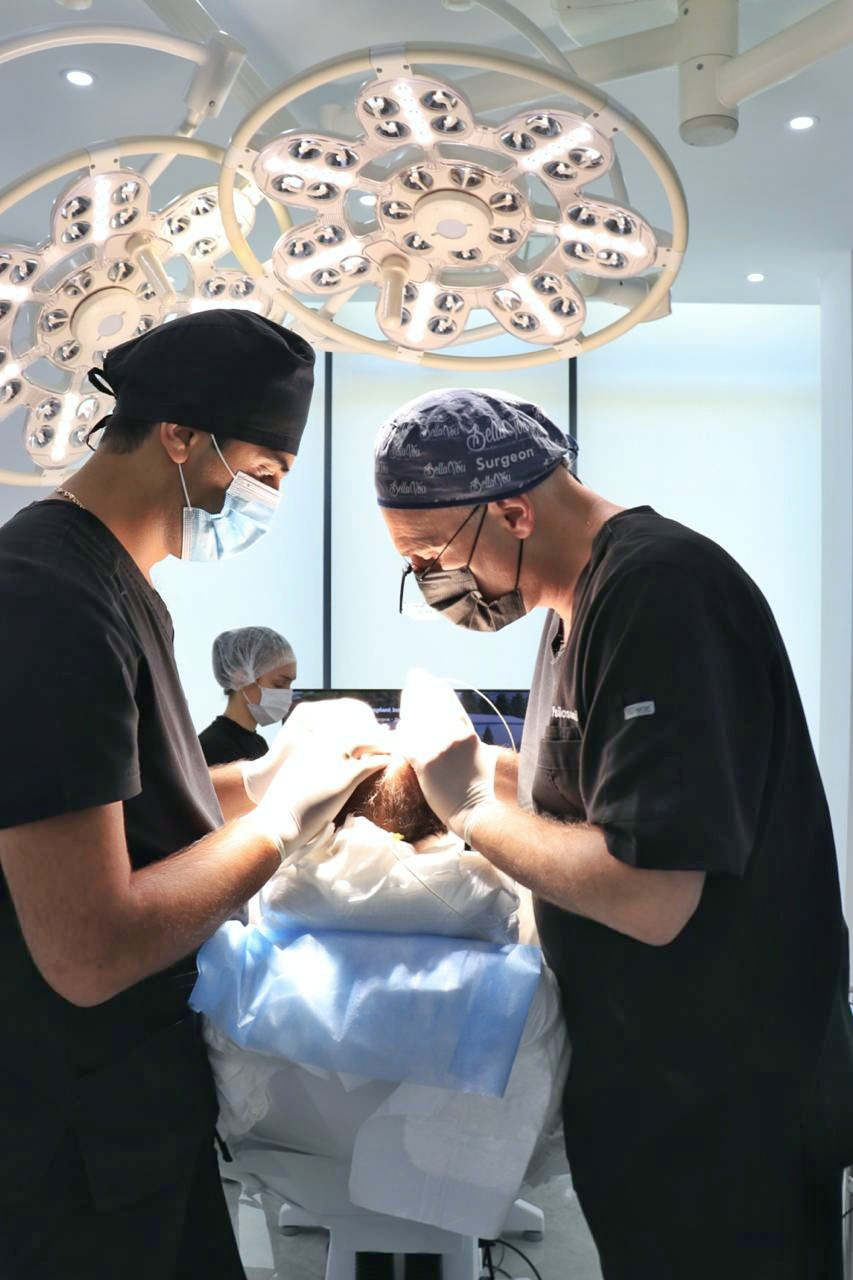
Professor A. Tsilosani performs hair transplant
What does the transplant process affect?
The hair transplant process directly affects the result. That is, the survival rate of the hair determines whether it will be whether they will grow throughout life or fall out. Therefore, it is important to know the nuances of the process and understand the technologies! This will help you make the right choice and not lose your hair.
Obviously, the specifics of the process depend on the method, the technologies and tools used, as well as the skills surgeon. In this article we will tell you about how hair transplantation is performed using modern methods and international transplantation standards.
Contraindications to hair transplantation and complications
Depending on the technology used, hair transplantation may or may not have contraindications. For example, if a certain type of local anesthesia is used, which eliminates the risk of bleeding, then for patients Thrombocytopenia does not contraindicate transplantation.
With the use of minimally invasive modern technologies and aseptic rules, a disease such as diabetes can also be treated is not a contraindication. It is necessary to understand that hair transplantation is done according to indications. It should prescribed by a doctor, so a consultation is necessary before the procedure.
If modern technologies are followed, complications after hair transplantation almost never develop. This a comfortable procedure after which you can immediately return to your normal life.
What preparation is needed for hair transplantation?
The decision has been made, you want to change the look of your hair for the better. How should you prepare for the transplant, what to do take with you?
"No special preparation is required, just bring a good mood and a hearty snack. Depending on the country and the clinic, there is a certain set of simple tests (for example, a hospital complex), and also need a test for coronavirus COVID-19"
transplant surgeon A. Tsilosani
Consultation, choice of strategy
During the consultation, the surgeon analyzes the donor area and evaluates the hair reserves. Depending on age the patient and the degree of baldness, the required number of grafts is selected (follicular unit, more about grafts here (link to our article)). If necessary, the reserve number of grafts that is needed is calculated. leave for the next transplant, if it is needed in 10-15 years. It is necessary to make a balanced decision tactical decision for the coming decades. If you do not leave the required number of hairs for the future, the patient may face a problem. Unfortunately, in pursuit of profit, not all doctors follow this principle, trying transplant as much hair as possible at once. About the negative consequences of a bad attitude to transplantation warns the International Society of Hair Reconstructive Surgery in its program

Choosing a Hairline Design
A very pleasant stage is choosing a new hairline. Already at this stage you see how the dream begins to come true! Together with the doctor, the border along which the transplanted hair will grow is chosen. Here, all the patient's wishes - shape, depth of the new growth line, features of facial symmetry. The surgeon offers several options that are drawn directly on the skin and the patient can choose any of them. The border can be located lower, or go higher, imitating natural indentations in the temporal areas.
It is very important to choose the most natural growth line for your face. It is also necessary to consider the length hair that you wear or want to wear. Since short and long hair have the same growth line will look different. An experienced doctor will tell you all these nuances during the consultation.
If the procedure is performed by an experienced surgeon, then even at the time of the operation itself it will be possible to correct the new one. growth line - lower or raise it a little. The new hairline is especially clearly visible with the "hairstyle" method immediately" when long hair is transplanted. You see the finished result, so in the future it will be possible to do without unpleasant surprises.
When transplanting a beard or eyebrows, an optimal border is also selected, which can be adjusted at the moment follicle implantation.
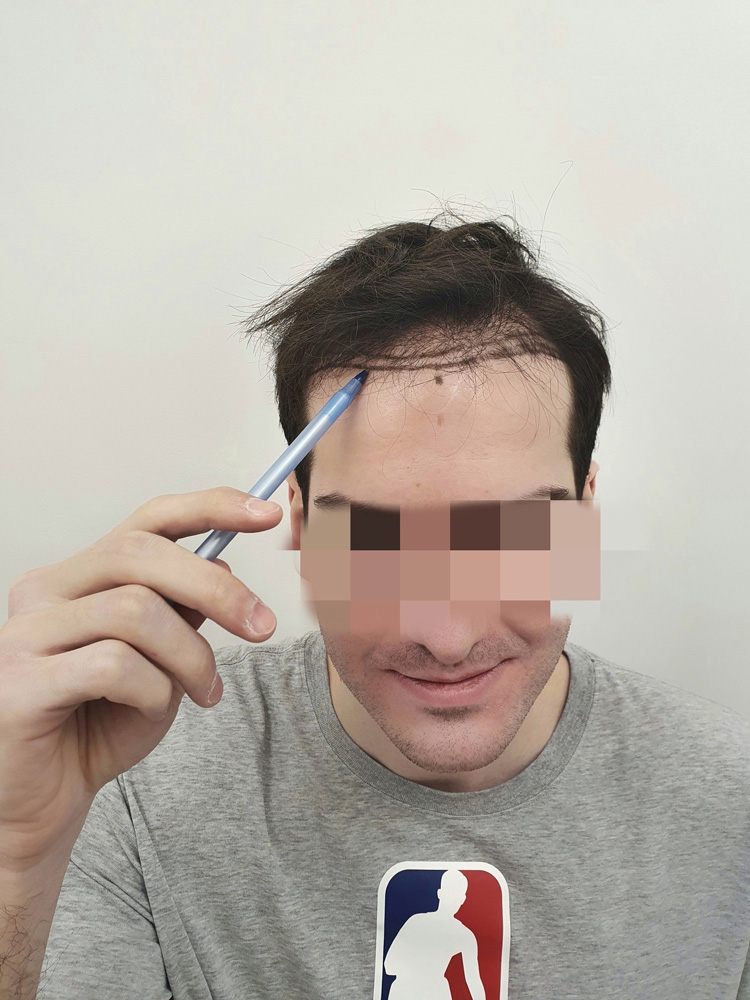
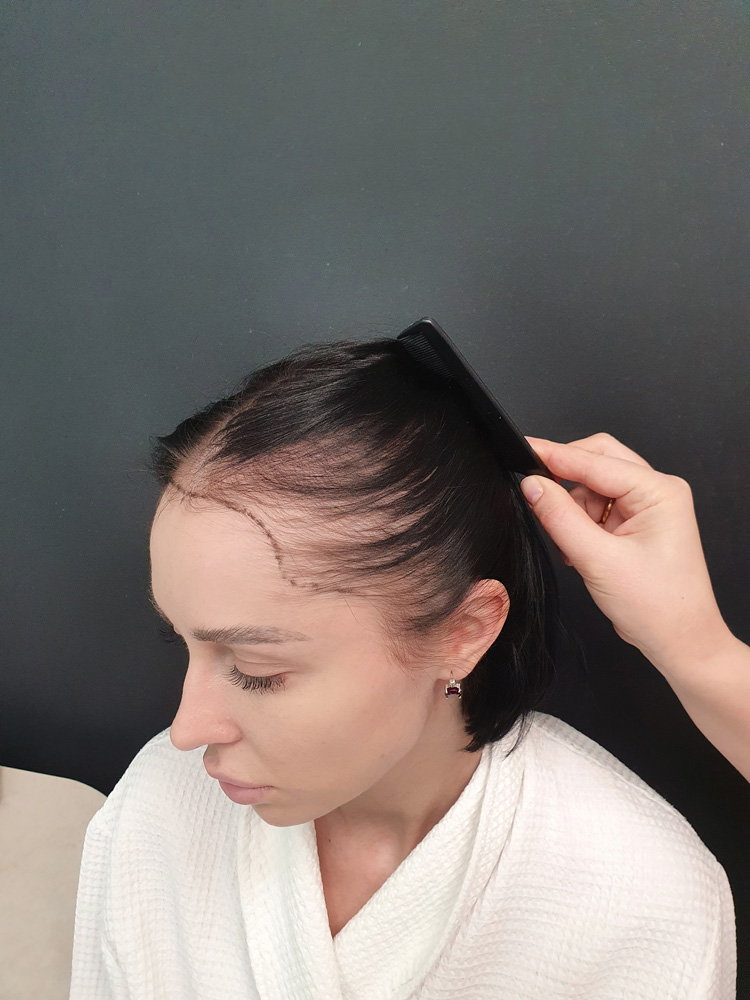
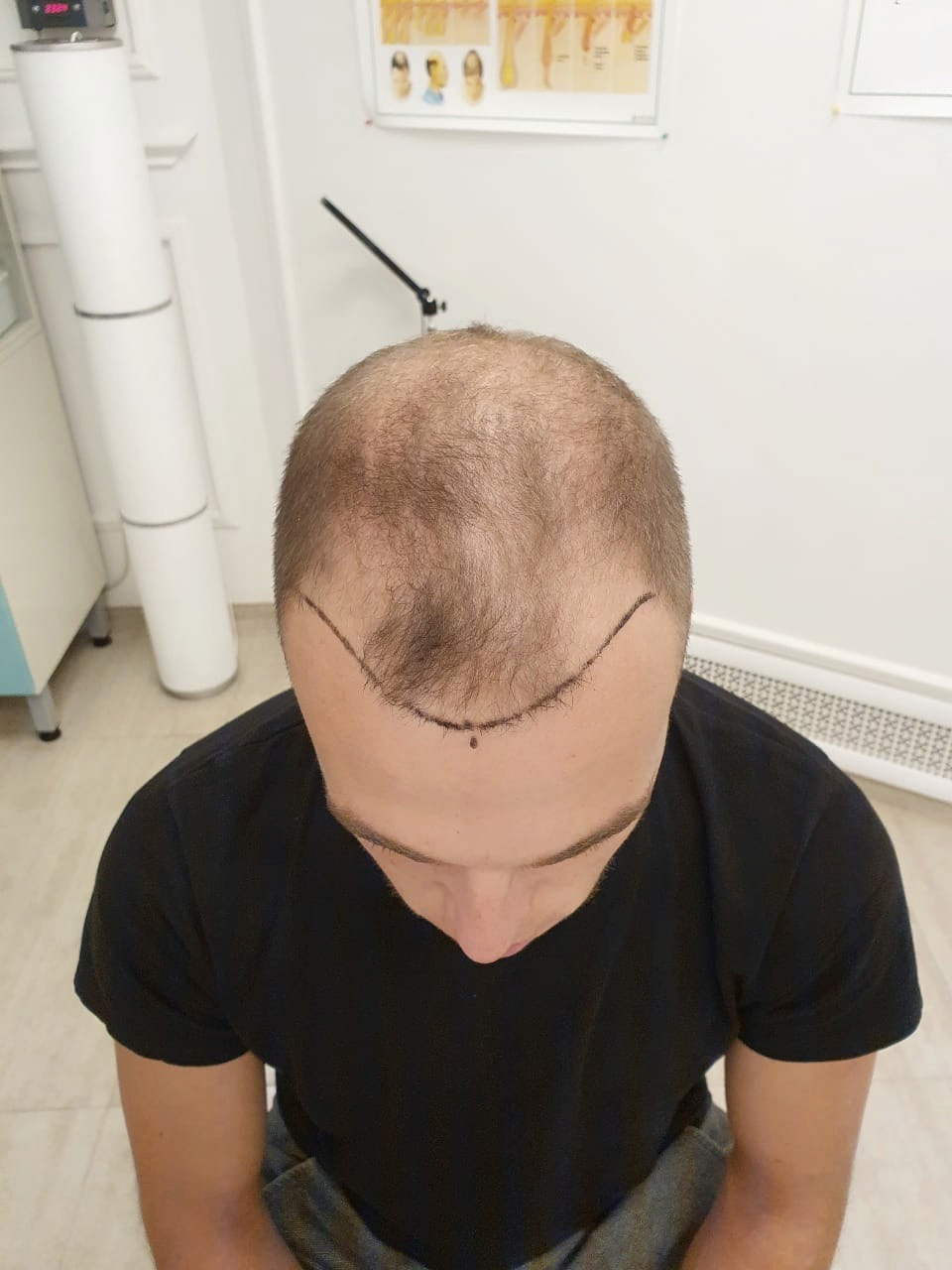
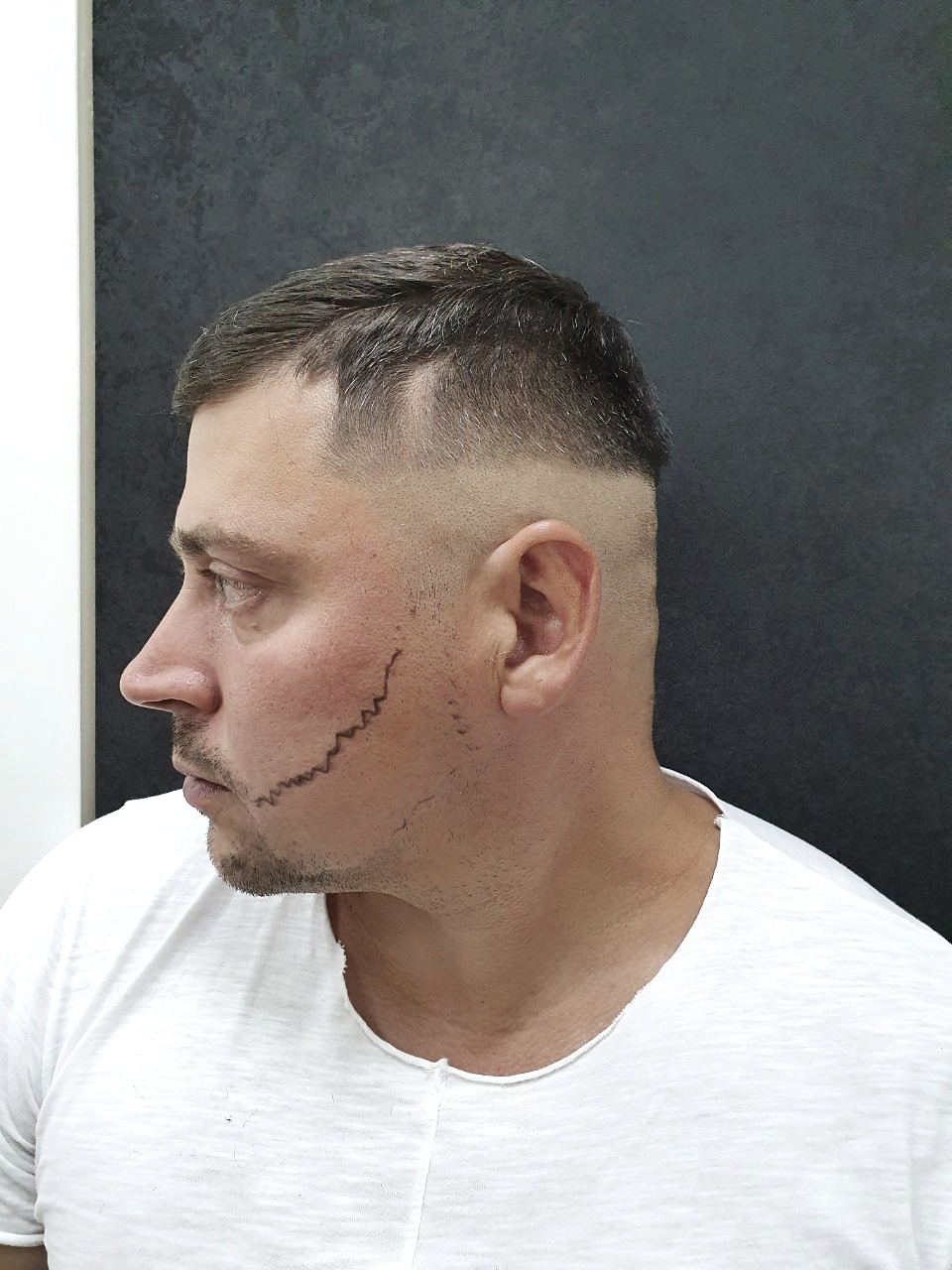
Choosing a Hairline Design
Preparing the hairstyle
No hair preparation is required before surgery. Since most patients prefer the methods without shaving and noticeable defects on the head, then you can come with your standard hairstyle. If used method of long hair transplantation - there will be no visual changes on the back of the head. With the FUE method, fully no shave also, the hair is not shortened or shaved. There are other options - ladder shortening, when the hair are shortened in portions. The areas of hair extraction are hidden under long hair. If the patient wears quite short hair - you can use a semi-box haircut. Below is a table of what options for changing hairstyles on the back of the head are possible with different methods. According to modern transplant technologies, the hair in the front is not requires trimming or shaving.
What the back of the head looks like with different hair transplant methods
| Hair Transplantation Method | Fully without shaving |
Staircase shortening (not visible under hair) |
or a haircut semi-box |
| Aesthetic FUE | + | + | |
| FUE fully no shave | + | ||
| The "hairstyle at once" method | + | ||
| Combined FUE+FUT | + | ||
| Low-impact FUT | + |
Anesthesia stage – what kind of anesthesia is used?
The next stage of transplantation is local anesthesia. New scientific developments in the field of hair transplantation make the procedure completely painless. There is no need to use sedation or general anesthesia. However, in some cases it may Medicinal sleep or general anesthesia may be used at the patient's request.
"We do not recommend anesthesia for hair transplant procedures. But if the patient has a fear at the level of a phobia, then anesthesia can be used. In other cases, we use our own patented local anesthesia. Its main feature is the minimization of the risk of edema. This anesthesia has a prolonged “gentle action, so there will be no discomfort during or after hair transplantation.”
Doctor of Science, A. Tsilosani
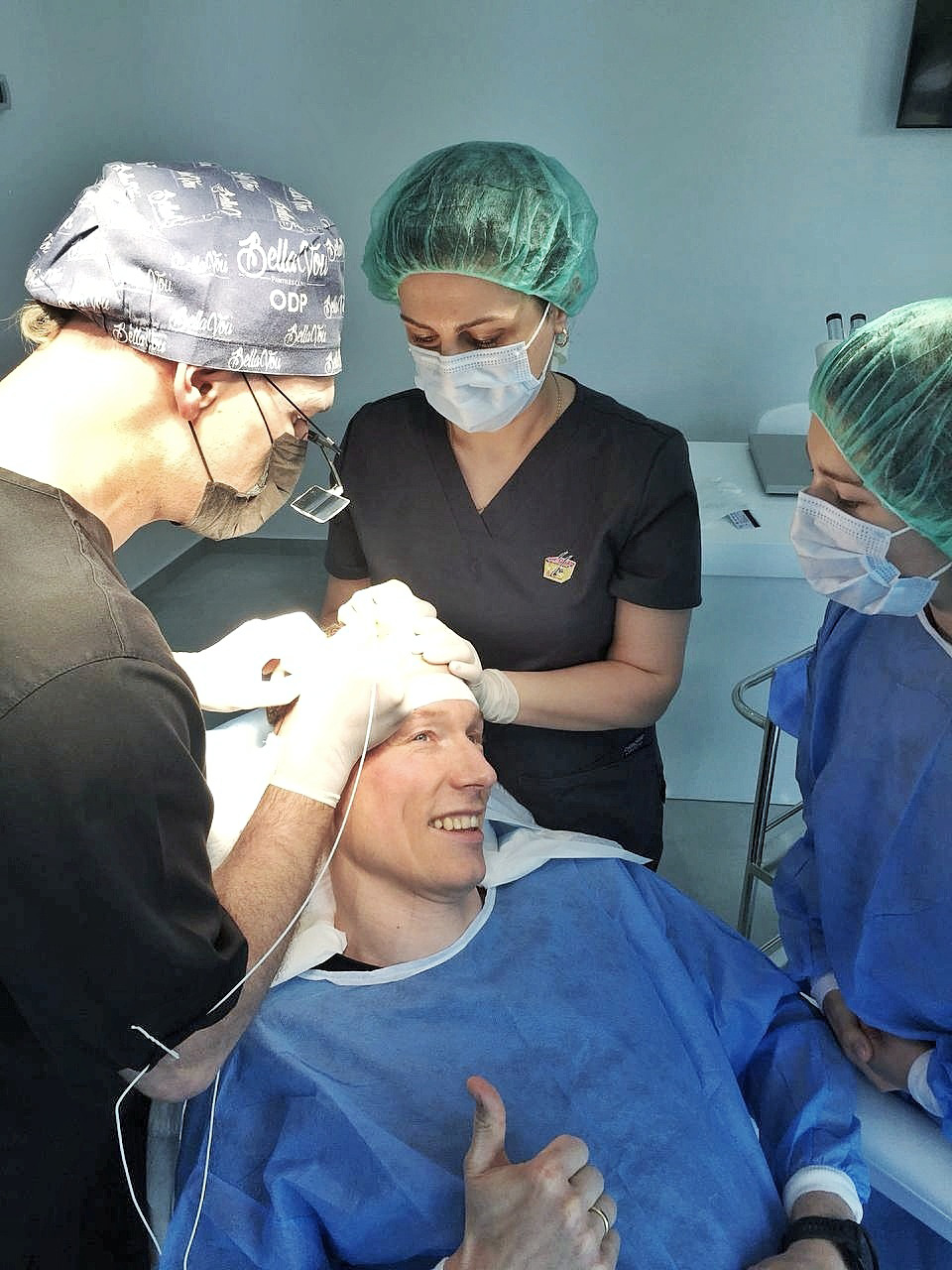
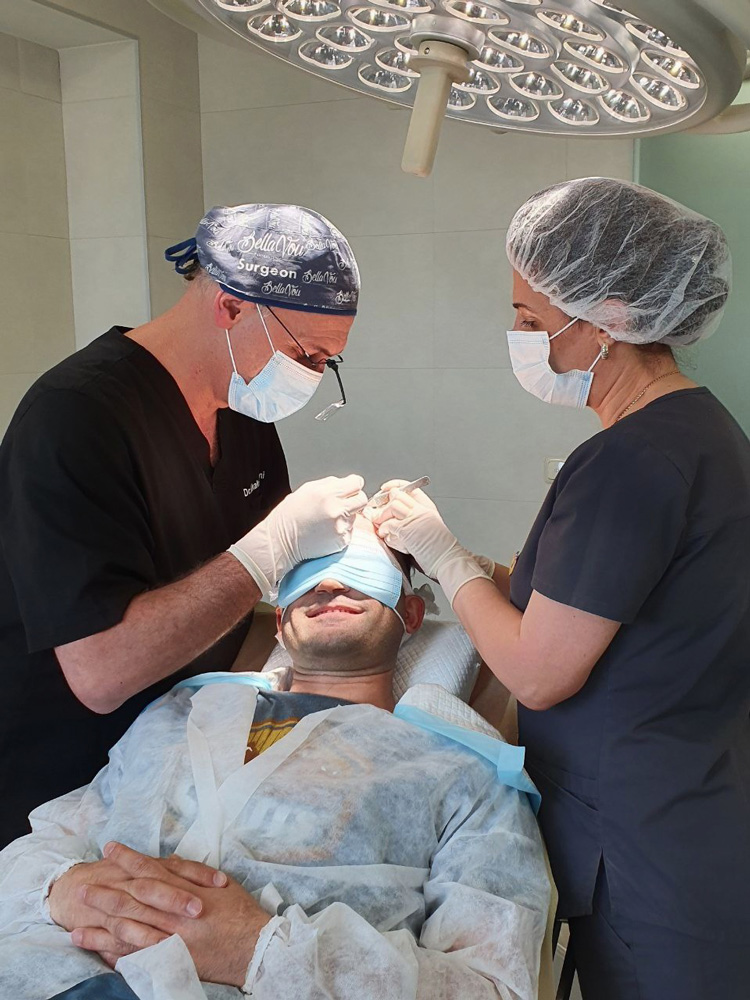
Extraction of grafts
Depending on the method, the extraction of follicular units (grafts) occurs in different ways. Modern technologies allow you to choose non-traumatic options and not experience discomfort. The patient is comfortable is placed on a chair and a special pillow and communicates with the doctor. At this time, the required number of grafts extracted from the back of the head or other areas (beard, body). With the FUE method, each graft is extracted from the skin individually with a special tool. When using suture methods, the surgeon makes a small incision in the scalp and removes a skin flap with hair, a suture is applied. Then the follicles from this area are removed under a microscope. If the doctor has modern technology, the suture will be completely invisible under the hair even immediately after the procedure.
Massage during hair transplant procedure can be a pleasant bonus. It helps to relax, get rid of fear, sometimes it's nice to take a nap. Improving blood circulation helps optimize the flow of all natural processes and, possibly, even better graft survival.
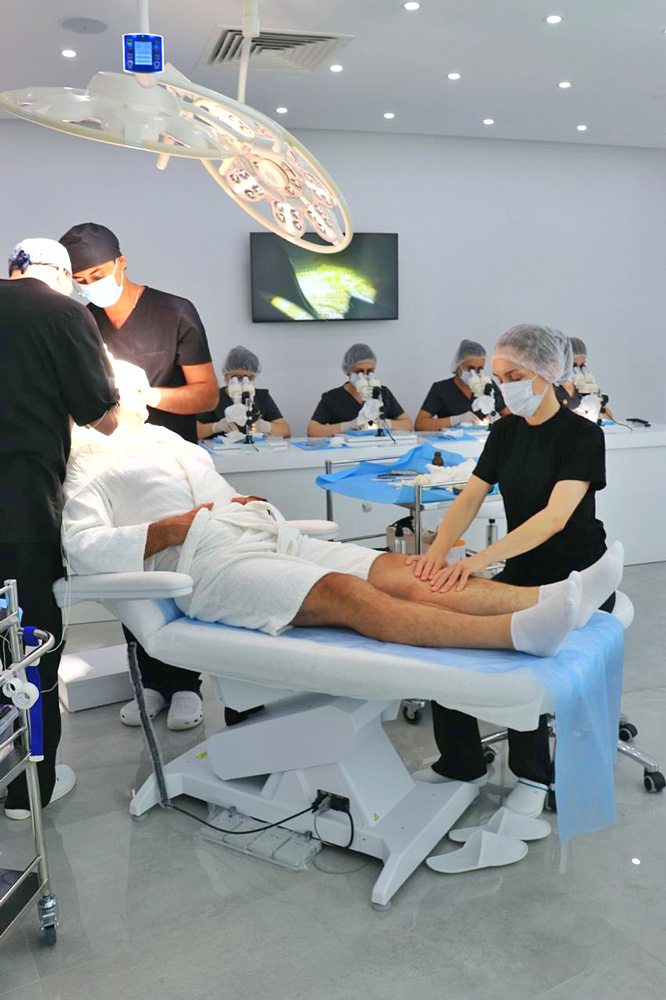
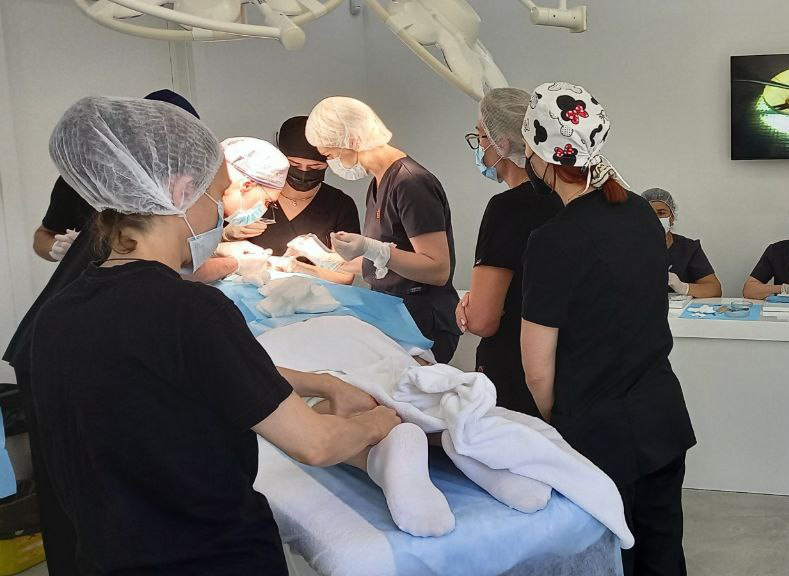
Relax massage during hair transplantation
It is very important that the grafts are extracted whole , without division. Also from the surgeon's experience and technology depends on whether the grafts will be damaged during extraction. Split into pieces or damaged during collection the graft loses viability and may not take root in a new place. Since at the point of graft removal there will never be nothing will grow, then the follicles that do not take root will be lost forever. It is important that the surgeon correctly determines suitable method of graft collection and used quality equipment. It depends on whether the hair will be lost or they will take root in a new place.
In percentage terms, this stage takes about 25-45% of the procedure time (depending on the technique).
Hair follicles can be extracted either completely long (long hair transplant) or shortened – roots hair. It depends on the method chosen by the patient.
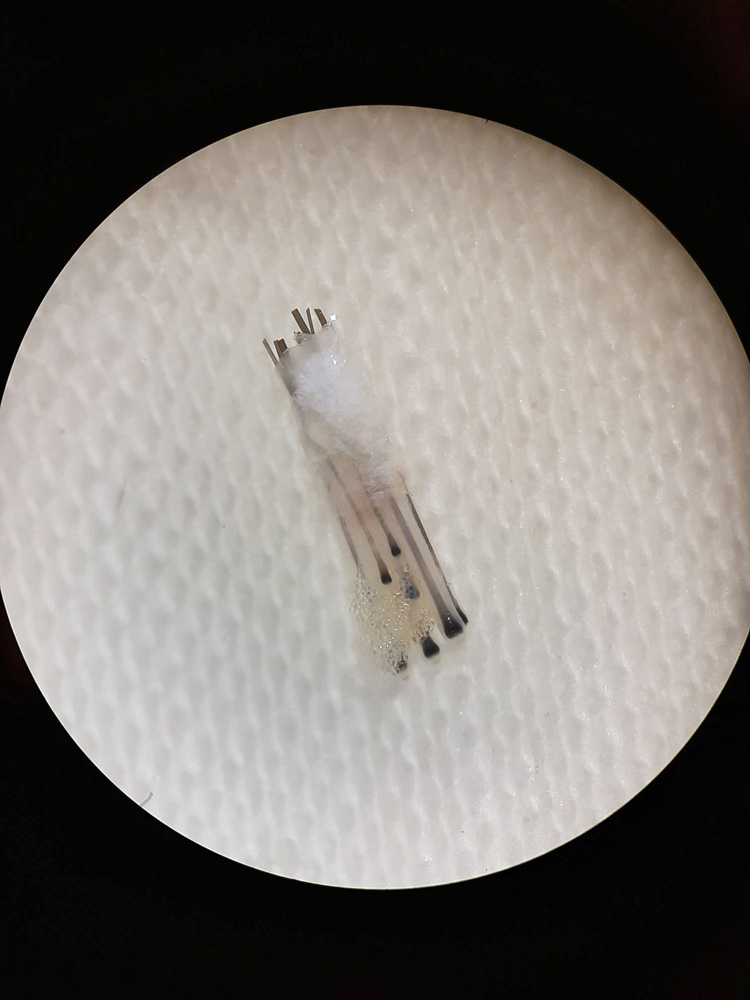
Short hair graft after extraction
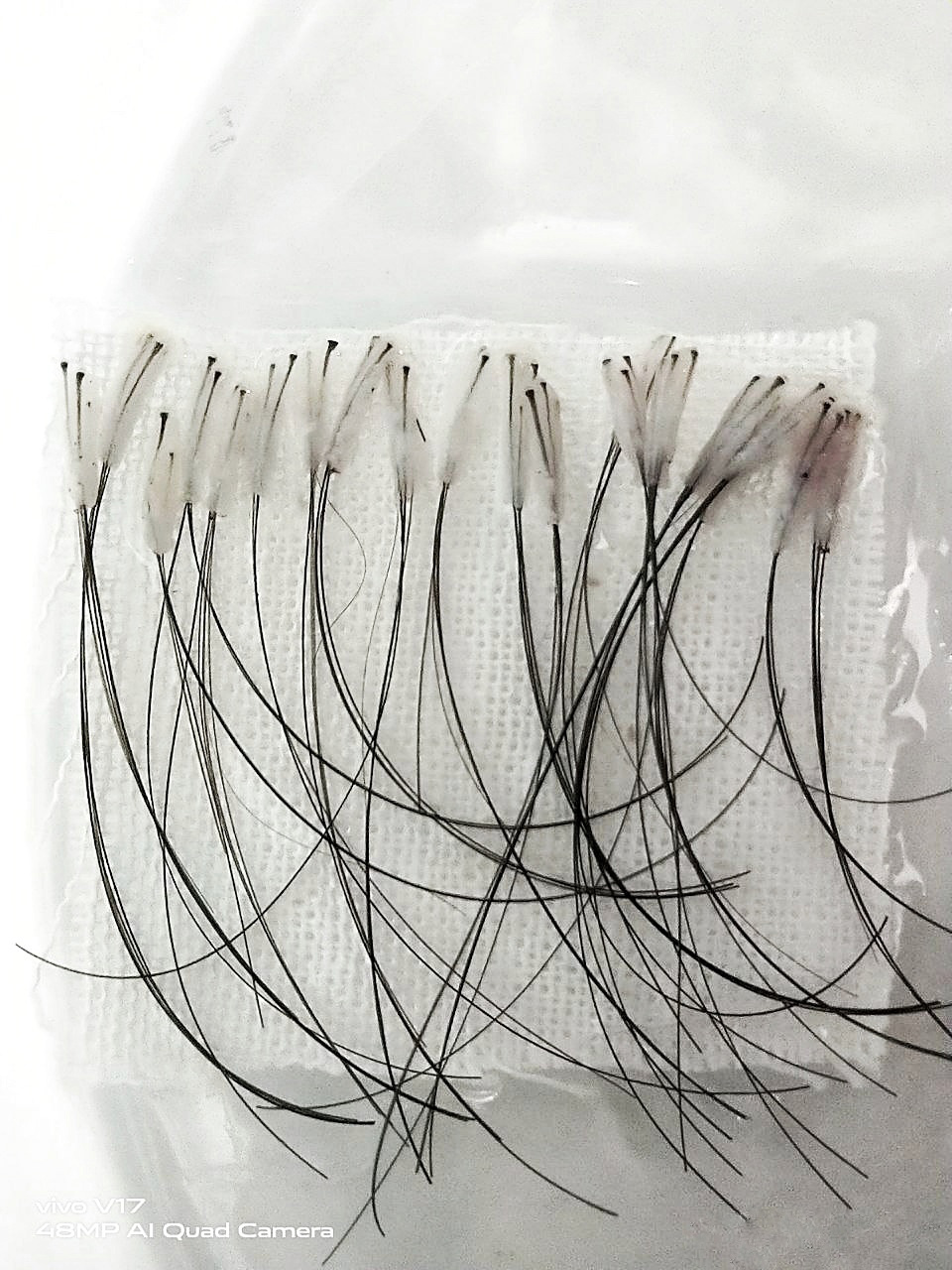
Long hair grafts after extraction
Formation of micro holes
A very important stage of hair transplantation. It is at this stage that the parameters of the natural appearance of the future are laid down hairstyles. The angle of inclination to the skin and the direction of the hair are formed. From how accurately the micro-holes are made the natural appearance of the transplanted hair will depend. This is especially true for the front hairline, which will immediately give away the work of an inexperienced doctor. When forming the border of the beginning of hair growth there should be no unnatural straight lines and angles. To reconstruct the natural appearance of the crown, it is important to form natural slight curl. If the micro-holes are made carelessly, the transplanted hair may stick out and look like dolls.
When using DHI technology, this step is skipped.
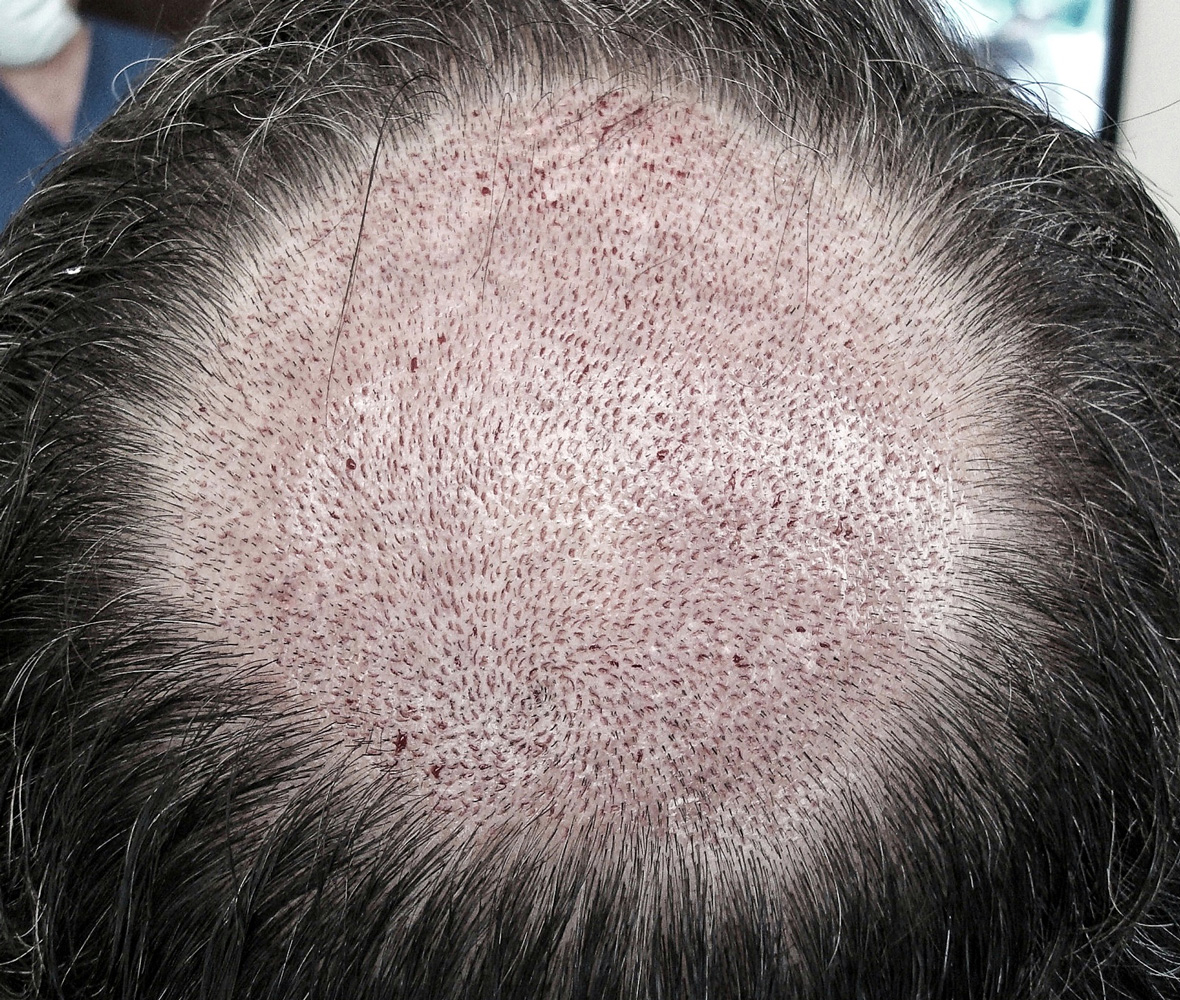
Forming a natural curl on the crown
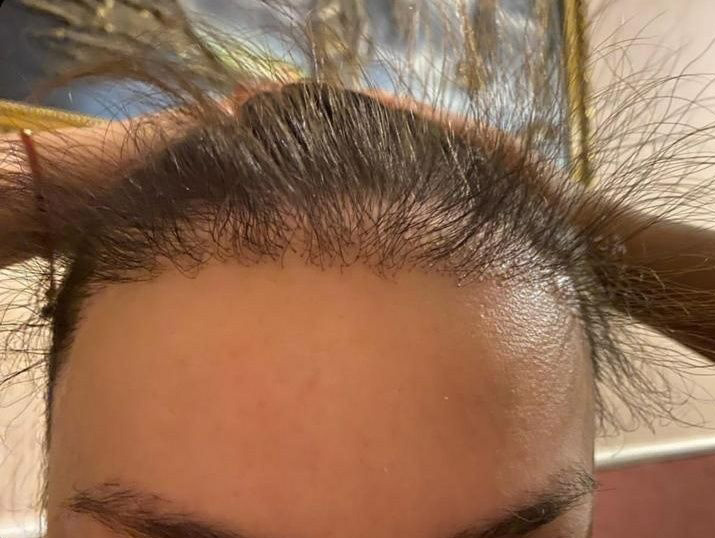
Hair growth due to improper formation of micro-holes
Coffee break or lunch
Modern hair transplantation lasts on average 3-4.5 hours (average volume 1500-2500 grafts), so if desired You can take a coffee or lunch break. The patient can leave the office, rest, drink coffee or have a snack. Such a break does not affect the quality of the transplant. There is a myth that grafts lose their survival rate, if they are outside the skin for a long time. However, scientific studies have confirmed otherwise. Doctor B. Limmer (*Bobby Limmer, MD FAAD) studied the quality of grafts that were outside the skin for 2, 4, 6 and more hours. He proved that keeping grafts outside the skin even for 6 hours does not reduce their survival. The survival of such grafts after implantation amounted to more than 90%!
Compliance with transplantation rules and the use of modern technologies allows grafts to be fully preserved survival rate. And the patient should take a break and rest.
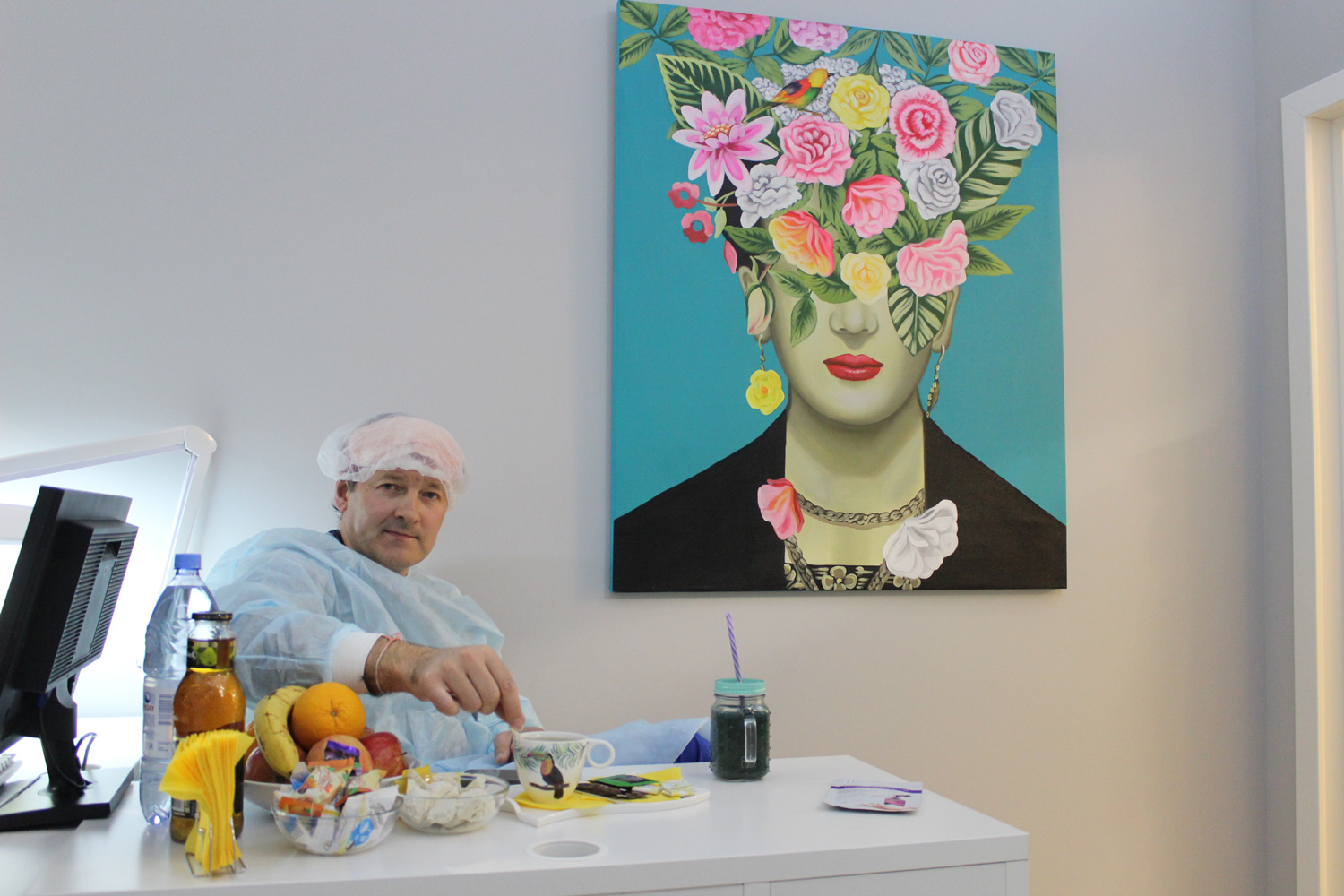
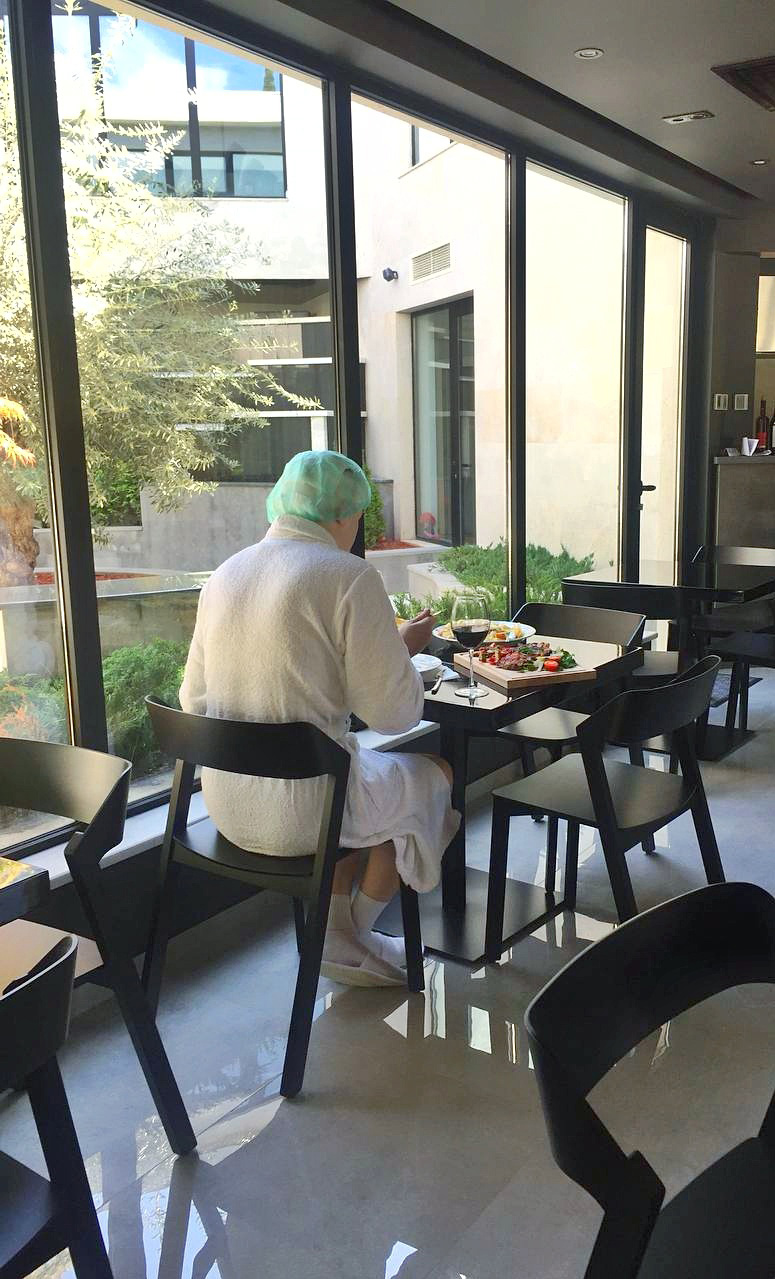
Rest break during hair transplant
Implantation of grafts (hair implantation)
At this stage, each graft (follicular unit) moves to a new place of residence. Will the hair be able to to survive in a new place or not and what influences this – we discussed above. Also, the survival rate of the graft is influenced by the technique of its implantation, that is, how it gets into the skin. Follicular units are implanted with using special tweezers or implanter handles (such as Choi Implanter, Lion Implanter, Hwang Implanter) or DHI. Of course, each manufacturer claims that its implantation tool is the most best. However, in practice, much more depends on whose hands the instrument ends up in. Experience and skills The surgeons play a decisive role here.
What does the head look like immediately after transplantation?
After implantation of grafts on the head small map dots are visible. In case of transplantation of long hair these the dots are covered with hair (photo below). When the doctor uses a low-traumatic technique for implanting grafts, redness disappears completely without a trace within 7-14 days.
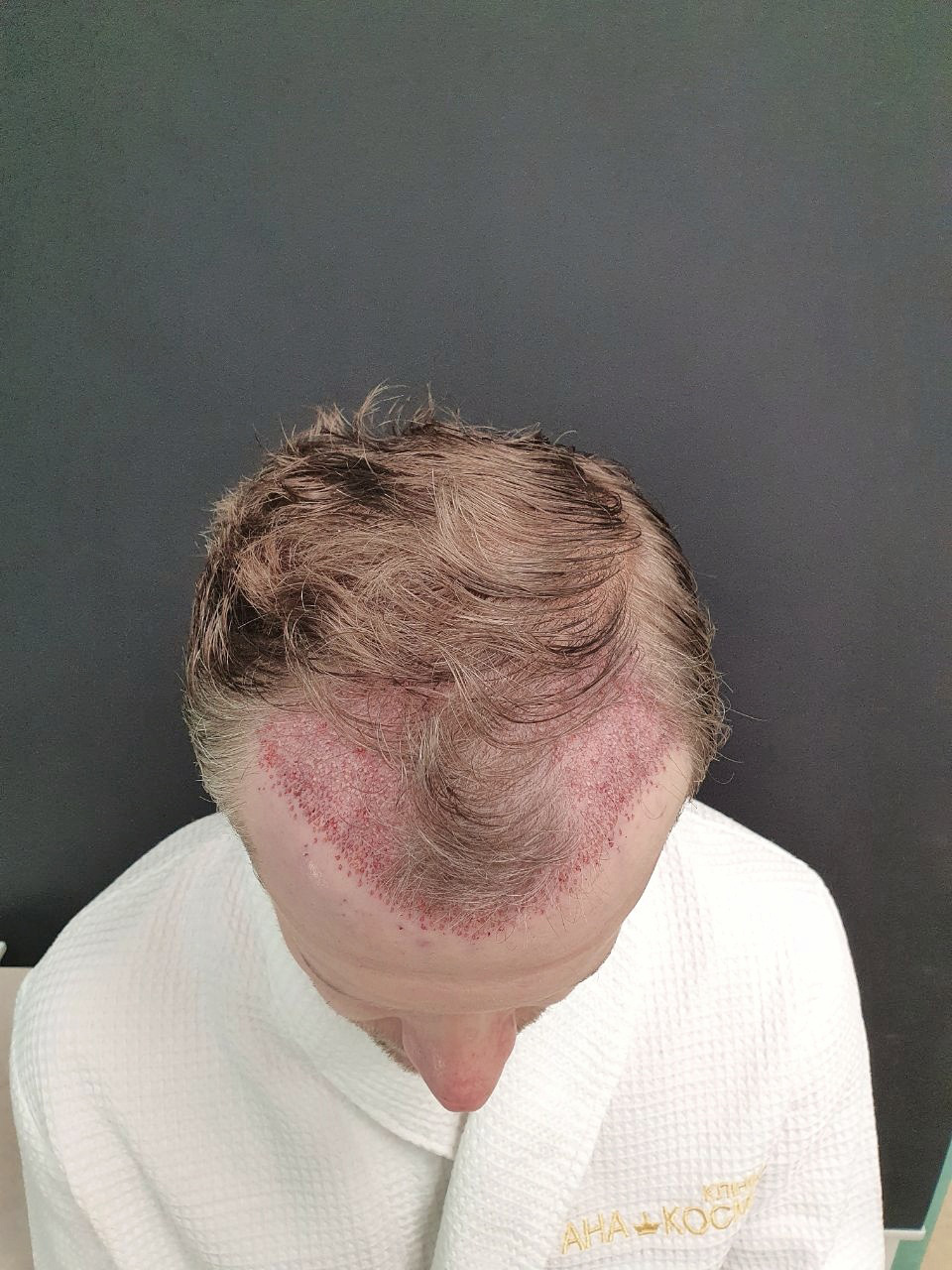
What do grafts look like after transplantation using the FUE no shave method?
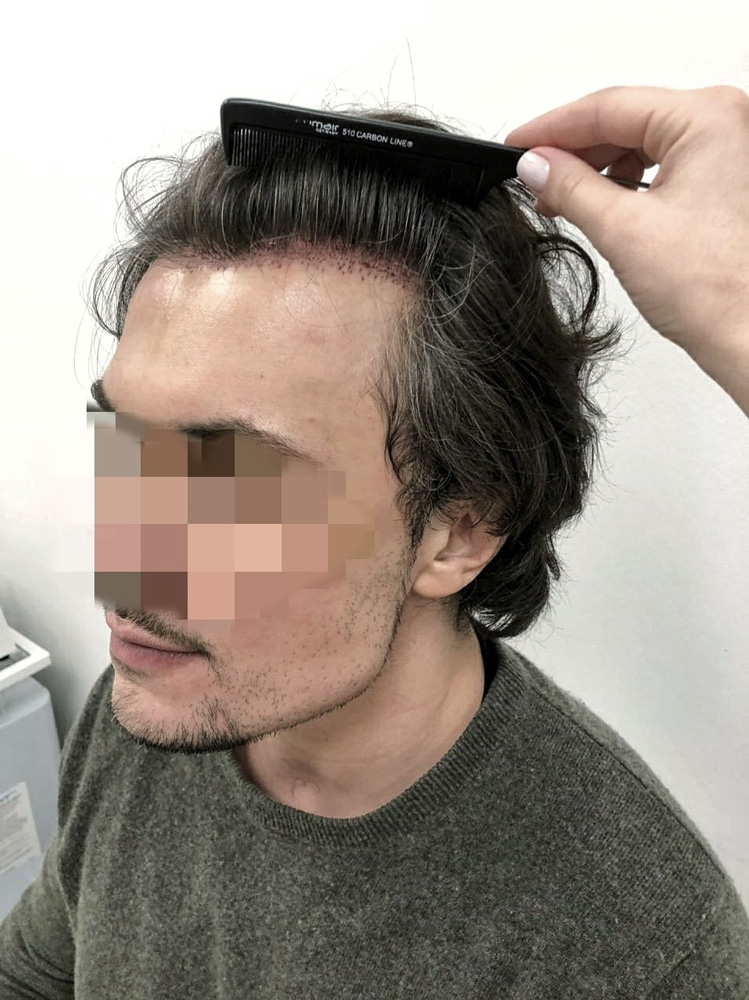
What do long hairs look like after implantation?
Drying, combing and styling your new hairstyle
This stage is more related to the method of transplanting long hair "hairstyle at once". In this case, not hair root, but the full length. After implantation, the hair is dried with a hairdryer and styled as desired patient. The photo below shows hair styled immediately after transplantation and the next day. Different hair styling options creates different types of hairstyles. A photo of this patient before the procedure can be seen here
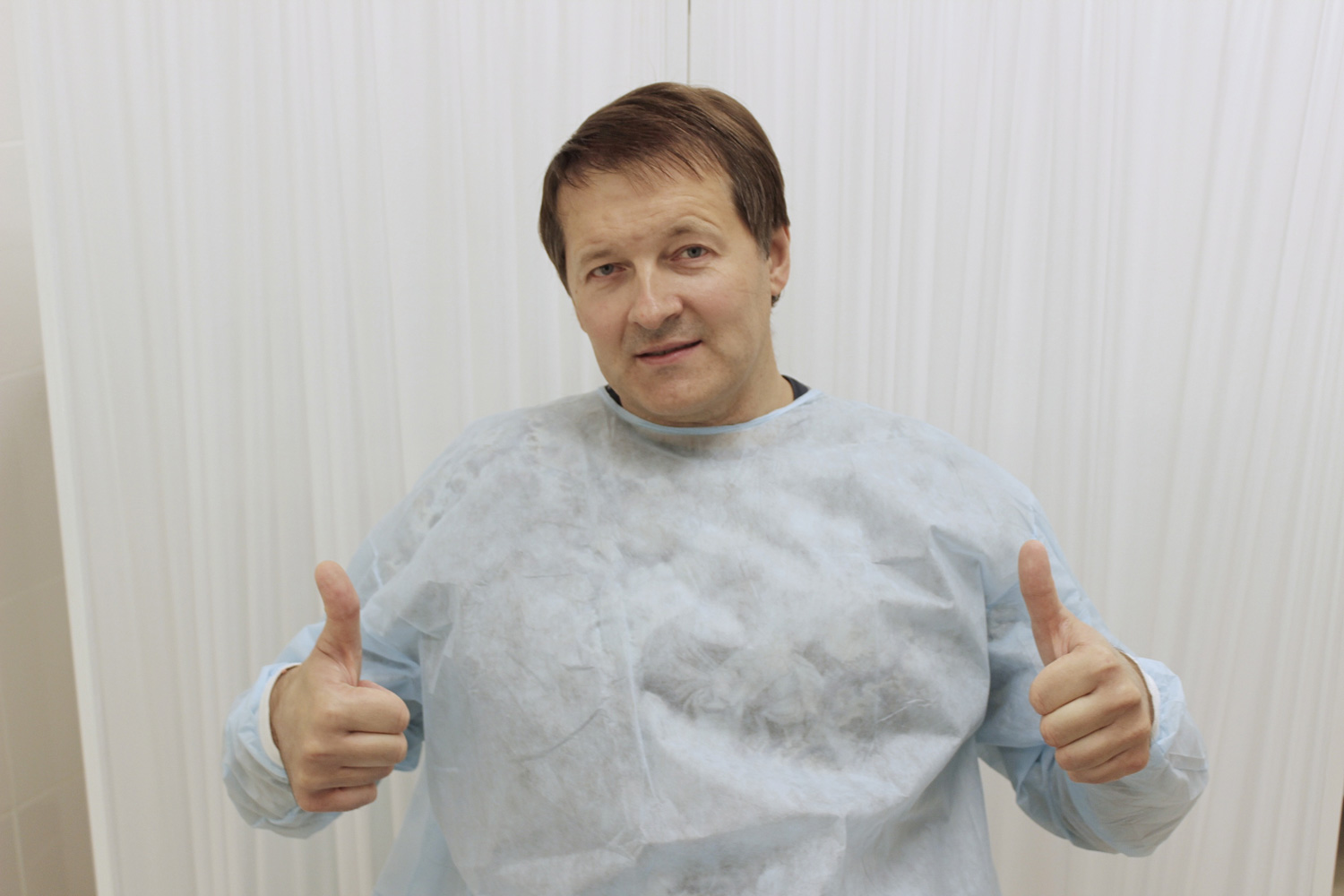
Immediately after long hair transplant
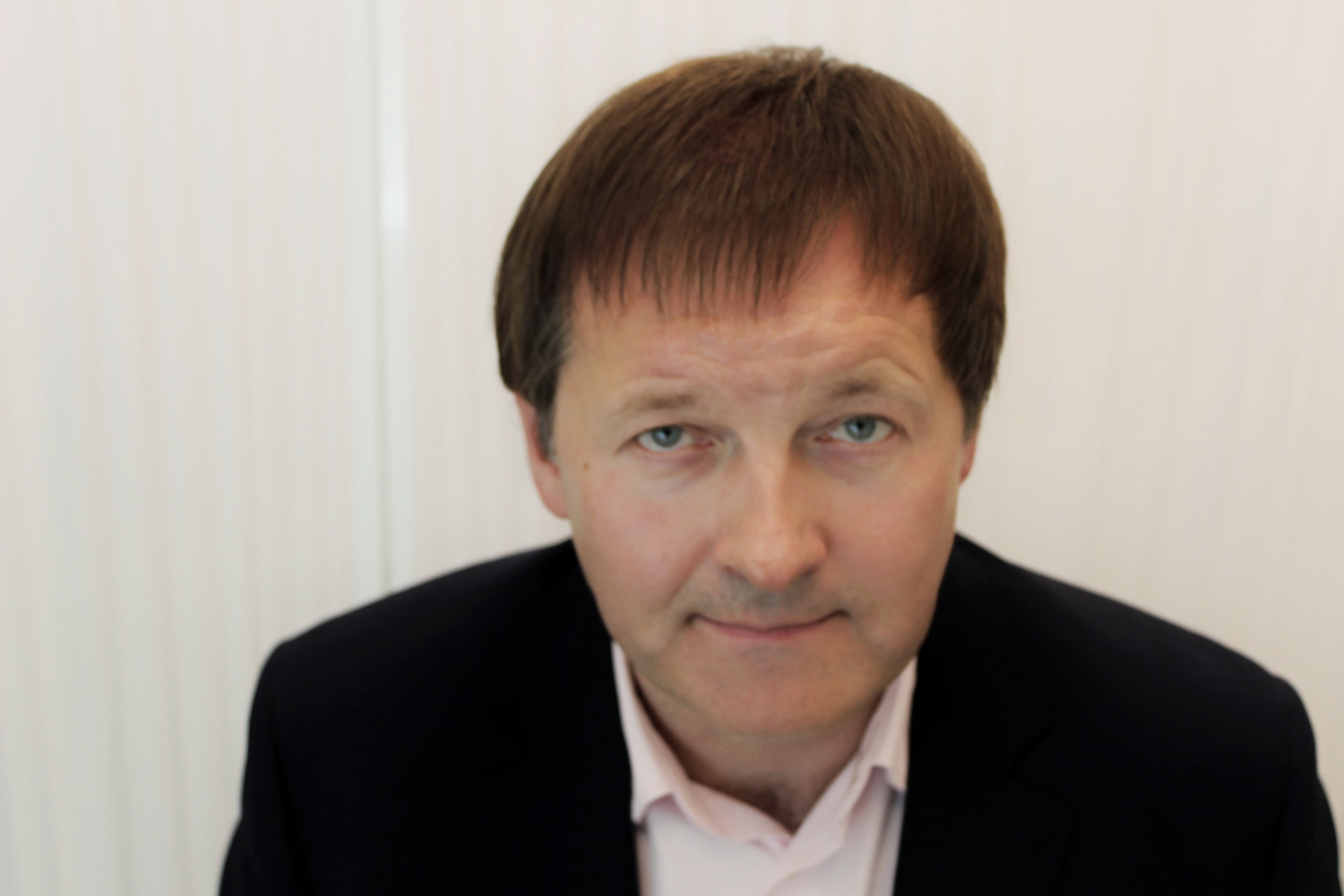
The day after long hair transplant
Is a next day examination necessary?
If the patient wishes, he/she can come for an examination the next day. This is not mandatory, but it will help to avoid anxiety for anxious people. During the examination, you can wash your hair under the supervision of a doctor. Red dots on implanted hair will completely disappear in 7-10 days. New hair will begin to grow in the period from 3 months. the first noticeable result will be visible within 6 months. And in the period up to a year you will be able to see the whole result – when the full number of hairs grows from each graft.
Want to learn more about hair transplantation or calculate the cost? Send a request and we will answer your questions in detail. questions.
To leave a comment, log in
Where does the doctor work
Reception cities – hair transplantation is performed in the following cities:
 Prague
 Tbilisi
 Moscow
 Dubai
Dubai
 El Kuwait
 Minsk
Minsk
 Yerevan
 Kyiv - Lviv
 Melbourne
The largest new clinic of Dr. A.Tsilosani in Georgia.